Paver Driveways Are Having a Moment — Here’s What Boise Homeowners Need to Know
Driveways have quietly become one of the most design-forward decisions a homeowner can make. Here’s what’s driving the shift — and what you need to know before replacing yours in the Treasure Valley.
Paver driveways are growing in popularity across Boise and the Treasure Valley for good reason: they outperform concrete and asphalt on nearly every meaningful dimension — durability, repairability, drainage, and curb appeal — and they’ve evolved from a luxury novelty into a mainstream choice for homeowners who are serious about their property’s long-term value.
But not all paver driveways are created equal. The wrong materials, the wrong base depth, or the wrong contractor can turn what should be a 30-year investment into a recurring headache. This guide covers what’s driving the trend, what makes a paver driveway worth the investment, how it compares to the alternatives, and what Treasure Valley homeowners should know before they commit.
Why Are Paver Driveways Trending Right Now?
The shift toward paver driveways isn’t a social media fad — it’s the result of several converging forces that have been building for years.
First, homeowners are spending more time at home and investing more intentionally in their properties. The driveway is the first thing a visitor sees. It sets the tone for everything behind it.
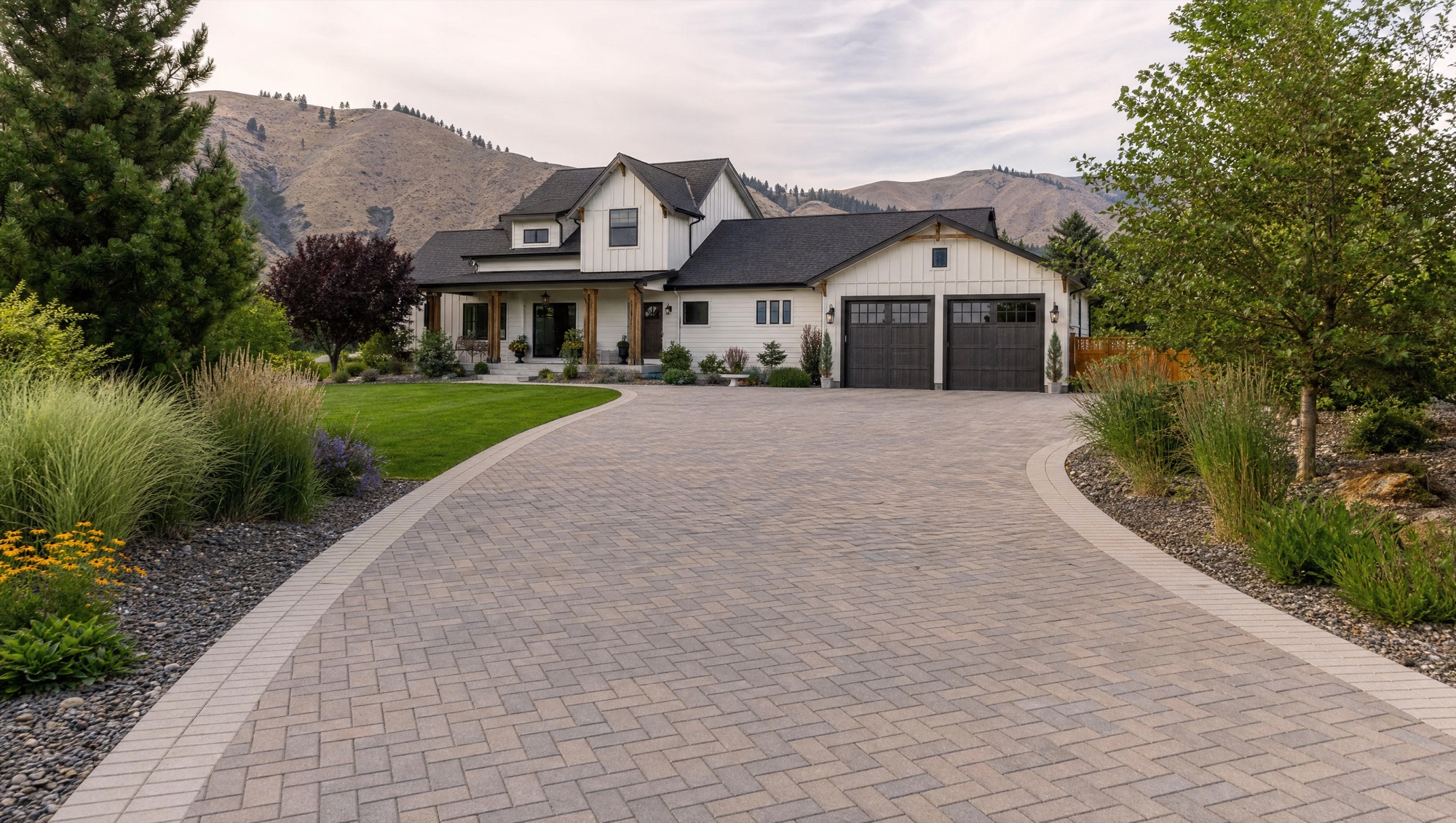
Second, design sensibility has matured. Paver driveways used to look conspicuously formal — red brick or ornate patterns that felt out of place on anything but a colonial estate. Today’s paver systems offer large-format options, natural stone profiles, warm earth tones, and clean geometric layouts that complement everything from a modern farmhouse to a transitional custom home.
Third, the practical case has become undeniable. Concrete driveways in Idaho crack. Asphalt degrades and needs resealing every few years. Paver driveways, when properly installed, simply don’t have these problems.
How Do Paver Driveways Compare to Concrete and Asphalt?
Durability and Longevity
Concrete driveways in Idaho typically last 20 to 30 years before cracking and spalling become significant enough to warrant replacement. Asphalt lasts 15 to 25 years with regular maintenance. Paver driveways installed correctly have manufacturer warranties of 25 years or more and realistically last 40 to 50 years.
Repairability
With concrete or asphalt, any repair is visible — patches never match, and a full replacement is eventually inevitable. With pavers, individual units can be lifted, the base corrected if needed, and the pavers reset.
Drainage
Standard concrete and asphalt driveways are impermeable — all rainfall becomes runoff. Paver systems, particularly permeable paver installations, allow water to pass through the surface and disperse into the base, reducing runoff and minimizing puddles.
Curb Appeal and Home Value
Paver driveways consistently rank among the highest-ROI exterior upgrades a homeowner can make. In Treasure Valley’s competitive resale market, a well-designed paver driveway signals quality, care, and investment throughout.
Upfront Cost
Paver driveways cost more to install than concrete or asphalt. For a standard two-car driveway in the Treasure Valley, expect paver installation to run meaningfully higher than a comparable concrete pour — sometimes two to three times the upfront cost depending on materials selected and site conditions. The relevant question isn’t whether pavers cost more today; it’s whether they cost more over 30 years.
What Paver Styles Work Best for Driveways in the Treasure Valley?
What to look for in a driveway paver:
- High compressive strength — rated for vehicle traffic, not just foot traffic
- Appropriate thickness — driveway pavers are typically 60mm or 80mm thick
- Stain resistance — especially for areas where vehicles park regularly
- Color and texture that complement the home’s architecture
Larger-format pavers have become the dominant preference in Boise’s higher-end neighborhoods. Warm earth tones — tans, tawny grays, and sandstone profiles — tend to age gracefully in Idaho’s light. Running bond and herringbone patterns remain popular for their structural interlocking properties.
What Does a Properly Built Paver Driveway Require?
Key requirements for a driveway that performs long-term:
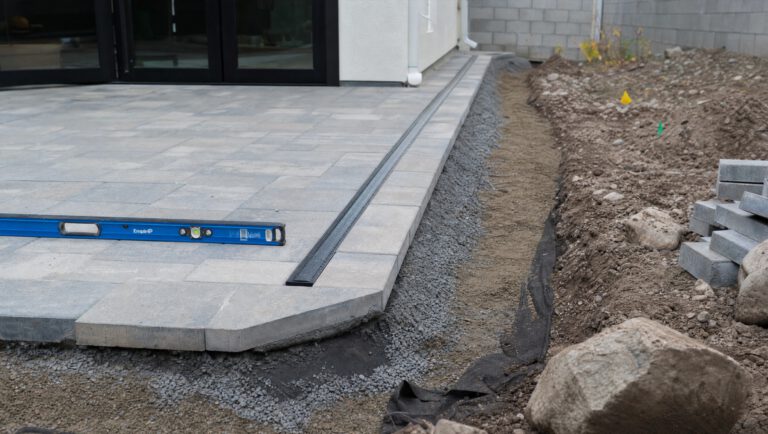
- 8 inches or more of compacted aggregate base
- Base material compacted in multiple lifts
- Proper drainage slope
- Heavy-duty edge restraints, properly staked and continuous
- 80mm thick pavers for vehicle traffic areas
- Herringbone or other interlocking pattern orientation
- Polymeric sand properly applied and activated in all joints
How Do I Maintain a Paver Driveway in Idaho?
- Annual inspection — walk the surface, check for any lifted or sunken pavers
- Joint sand replenishment — every few years
- Sealing — optional, every 3 to 5 years
- Weed management — properly installed polymeric sand greatly reduces weed growth
- Oil stain treatment — commercial degreaser applied promptly
- Winter care — avoid metal shovels that can chip paver edges
Frequently Asked Questions
How much does a paver driveway cost in Boise, Idaho? Paver driveway costs in the Treasure Valley vary based on size, material, site conditions, and drainage infrastructure required. For an accurate project estimate, a site visit and consultation is the right starting point.
How long does a paver driveway last? A paver driveway installed correctly will last 40 to 50 years or more with basic maintenance. The limiting factor is almost always the installation quality — specifically the base depth, compaction, and drainage design — not the pavers.
Can paver driveways handle Idaho winters? Yes — concrete pavers are specifically engineered to withstand freeze-thaw cycles. The key is proper installation: adequate base depth, correct drainage slope, and appropriate polymeric sand in the joints.
Do paver driveways increase home value? Yes. Premium hardscape — including paver driveways — consistently ranks among the highest-ROI exterior improvements for residential properties.
What is the best paver pattern for a driveway? Herringbone is widely considered the strongest pattern choice for driveways because of how the interlocking orientation resists the horizontal shear forces created by turning vehicle tires.
How are paver driveways different from paver patios in terms of construction? Driveway installations require a deeper aggregate base — typically 8 inches or more versus 6 inches for pedestrian-only patios — and heavier-gauge pavers rated for vehicle loads.
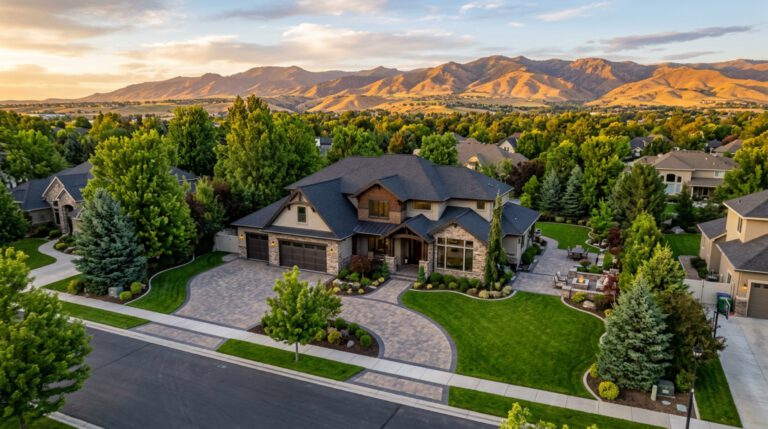
We install driveways like these across the valley — see our paver driveway work in Meridian.
Book a Project Discovery Call today.
Prefer to talk it through now? Call (208) 609-9805 — no cost, no commitment, just a conversation.
Nostalgic Paver Systems
Planning a project of your own?
Let’s talk through your space, your timeline, and what it would take to build it right the first time.
Book a Project Discovery Call