What 20 Years of Paver Installs Taught Us About Outdoor Spaces in the Treasure Valley
Two decades of working in Boise’s soil, building through its winters, and standing behind installations long after the crew has moved on. Here’s what we’ve learned.
When we started installing hardscape in the Treasure Valley over 20 years ago, the market looked different. High-end paver patios were still relatively uncommon. Most homeowners were choosing concrete slabs or basic stamped concrete for outdoor surfaces. The idea of a $75,000 or $100,000 outdoor living space — with custom paver work, integrated drainage, retaining walls, and outdoor kitchen pads — was something you might see in Phoenix or Southern California, not Boise.
A lot has changed. The Treasure Valley has grown dramatically, the expectations of Boise-area homeowners have matured considerably, and the outdoor living category has evolved from a niche luxury into a mainstream priority for homeowners who are serious about their properties. What hasn’t changed is the underlying work: the soil, the climate, the freeze-thaw cycle, the drainage challenges, and the unforgiving reality that a hardscape installation either gets built right or it doesn’t.
Over those two decades, we’ve built hundreds of projects across Boise, Meridian, Eagle, Nampa, Star, Kuna, and the surrounding area. We’ve seen what holds up and what doesn’t. We’ve watched installations we built 15 years ago still looking clean and solid, and we’ve been called in to fix work done by contractors who were long gone by the time the problems surfaced. We’ve learned things you can only learn by doing this work, in this place, over a long period of time.
This piece is a collection of the most useful things that experience has taught us — about the Treasure Valley’s land, its climate, its homeowners, and what it takes to build outdoor spaces that genuinely earn the investment put into them.
The Ground Here Is Unforgiving — and Most Contractors Underestimate It
The soils across much of the Treasure Valley are heavy in clay — a material that expands significantly when wet and contracts when dry. In a region that swings between wet springs and hot, dry summers, those soils are constantly in motion. An outdoor surface installed directly over poorly prepared native soil in Meridian or Nampa is going to move, because the ground underneath it moves. There’s no way around it.
Early in our work here, we learned to be systematic about soil assessment before any project begins. Different neighborhoods, different elevations, even different parts of the same property can have meaningfully different soil profiles. Areas near irrigation ditches or with high water tables need different base specifications than well-drained sites on a slight grade. Areas with a history of fill — common in subdivisions where lots were graded from cut-and-fill during development — can have buried organic material that continues to decompose and settle for years.
The lesson: there’s no universal base specification that works everywhere in the valley. A contractor who quotes your project the same way they’d quote one in a completely different neighborhood, without walking the site and understanding what’s under the surface, is guessing. Sometimes they guess right. Often enough, they don’t.
The pavers are the part everyone sees. The base is the part that determines whether the project is still standing and level fifteen years from now.
Idaho Winters Test Every Shortcut Eventually
The Boise area averages around 100 freeze-thaw events per year. That number is worth sitting with for a moment. One hundred times per year, water in the ground and beneath hardscape surfaces freezes, expands, and then thaws. Each cycle is a small hydraulic event — a slight lift, a slight shift, a slight compression of whatever is underneath.
Over one winter, those events are barely noticeable. Over five winters, they reveal everything that was done wrong. Inadequate base depth shows up as settling and uneven surfaces. Poor drainage shows up as lifted and cracked pavers along the edges of the installation. Improper edge restraints show up as paving that has gradually migrated outward, leaving gaps and trip hazards.
We’ve been on job sites in February, in freezing temperatures, fixing work that another contractor did two summers prior. The homeowner had no recourse — the original contractor was either out of business, unresponsive, or had written a warranty so full of exclusions that it covered nothing. The freeze-thaw cycle will find every shortcut that was taken during installation. In our climate, it’s not a question of whether — it’s a question of when.
This is why we’re particular about base depth, compaction, drainage, and edge restraints in a way that can seem excessive to someone comparing bids. It’s not excessive. It’s what the climate requires.
Drainage Is Never Someone Else’s Problem
In twenty years of building hardscape in the Treasure Valley, drainage has been a factor in virtually every project we’ve worked on — either by designing it correctly from the start, or by being called in to fix the consequences of it being ignored.
The Treasure Valley’s geography creates a specific set of drainage challenges. The valley floor is relatively flat in many areas, which means water doesn’t naturally flow away from properties as quickly as it does on more sloped terrain. Irrigation season — from roughly April through October — puts significant water into the soil on a regular basis. And the region’s clay soils, as noted above, hold moisture rather than draining it freely.
We’ve built projects where the drainage design was more complex than the paver installation itself. Elaborate French drain networks, channel drains integrated into the hardscape surface, downspout redirection systems that route roof runoff under and away from finished paving — all of it invisible once the project is complete, but essential to making sure the visible work holds up.
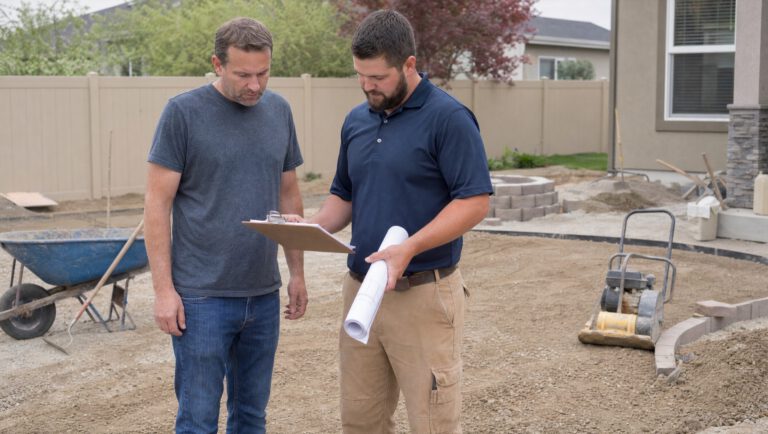
What we’ve learned is that homeowners rarely think about drainage until they have a problem with it. Our job is to think about it before they need to — to walk a property, identify where water is currently going, where it will go once we’ve covered a portion of the yard with impervious surface, and what needs to be built to manage it. That thinking happens before we design anything. It’s not an afterthought and it’s not an upsell. It’s the work.
The Treasure Valley’s Growth Has Changed What Homeowners Expect
Boise’s transformation over the past two decades has been remarkable to watch from the ground level. When we started, the Eagle foothills were sparsely developed. Meridian was a fraction of its current size. Star, Kuna, and many of the communities that are now established Treasure Valley neighborhoods were barely on the map.
The growth has brought significant wealth into the market, and with it, a sophisticated buyer with national reference points. Homeowners relocating to Boise from California, Colorado, Texas, and elsewhere have seen what high-end outdoor living spaces look like in mature luxury markets — and they arrive with those expectations intact. They’re not asking whether a nice patio is worth doing. They’re asking who can build it at the level they expect.
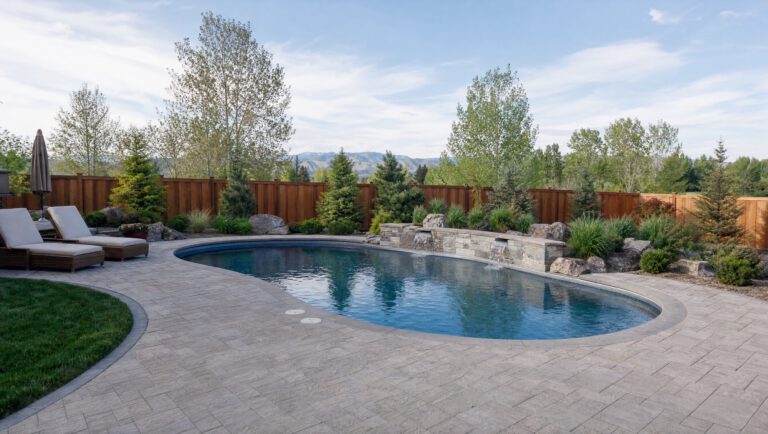
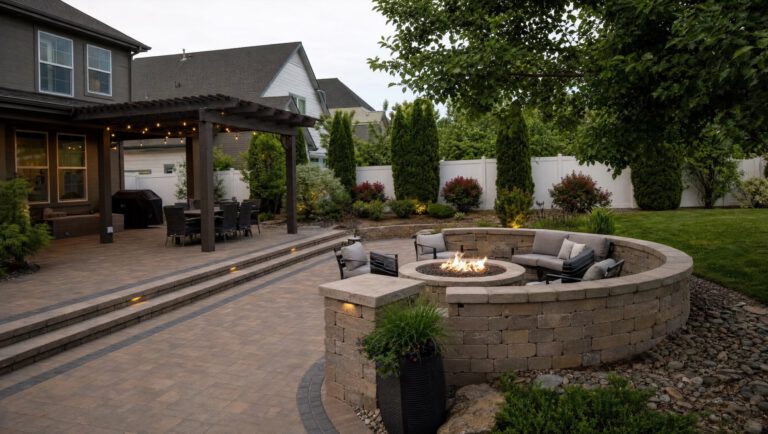
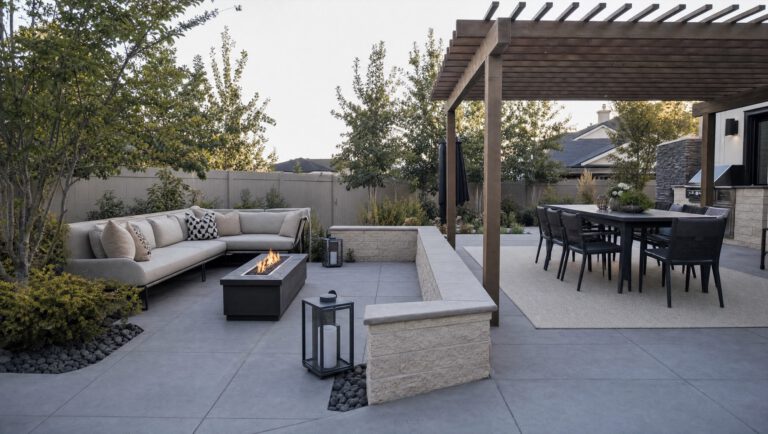
This has elevated the entire hardscape category in the valley. Projects that would have seemed extravagant fifteen years ago — $100,000 outdoor living spaces with custom paver work, retaining walls, fire features, and outdoor kitchen pads — are now a regular part of our work. The materials have improved, the design options have expanded, and the homeowners asking for this work are genuinely discerning.
What hasn’t changed is what they fundamentally want: something beautiful that also works, built by someone they can trust, who will stand behind it. The scale and the aesthetics have evolved. The core expectation — reliability, craftsmanship, accountability — hasn’t moved at all.
The homeowners who invest the most are also the ones who ask the most questions. That’s exactly how it should be.
Different Parts of the Valley Have Different Hardscape Personalities
Twenty years in one market teaches you things about it that no amount of research can replicate. We’ve come to understand the Treasure Valley’s neighborhoods not just geographically but in terms of what each tends to need and value from a hardscape project.
Boise’s North End and East End
These established, mature neighborhoods have older homes on lots with significant trees, established irrigation systems, and decades of soil layering. Projects here tend to involve more complexity — navigating existing root systems, working around mature landscaping, and integrating new hardscape with architecture that has a strong existing character. The design sensibility in these neighborhoods tends toward classic materials and traditional patterns that honor the home’s age and style.
Eagle and the Foothills Corridor
Some of the valley’s most ambitious outdoor living projects have been in Eagle and the hillside communities above the valley floor. The sloped terrain creates natural opportunities for dramatic retaining walls, tiered patios, and terraced outdoor rooms that use elevation changes as a design feature rather than a problem to work around. Drainage here requires particular attention — slope is an asset for moving water, but it needs to be managed deliberately so it flows where you want rather than where it wants.
Meridian and Southeast Boise New Construction
The bulk of the valley’s new-construction residential development has happened in Meridian and southeast Boise, and a significant portion of our work in recent years has followed that growth. New construction lots often present specific challenges: compacted fill soil from site grading, minimal existing vegetation, and homes with large hardscape footprints relative to lot size. Drainage design is especially important in these settings, where the native soil profile may have been substantially altered during development.
Nampa, Caldwell, and the Western Valley
The western end of the valley has its own character — larger lots, more agricultural heritage, and a buyer profile that often prioritizes durability and function alongside aesthetics. Projects here tend to include more driveway work and retaining wall applications, and the properties are frequently adjacent to irrigation infrastructure that needs to be accounted for in drainage design.
The Projects We’re Most Proud of Weren’t the Biggest Ones
We’ve built some large, complex, genuinely impressive projects over the years — multi-level outdoor living spaces, long retaining wall systems, complete driveway and entry feature replacements on high-end properties. That work is satisfying in its own way.
But the projects that stay with us longest are often the ones where we solved a problem that had been defeating someone for years. A backyard that flooded every spring, and the homeowner had tried everything. A driveway that had been patched and repatched for a decade with concrete that kept cracking. A retaining wall that was slowly failing and threatening the grade stability of a slope behind a home.
These are the projects where the functional result matters as much as the aesthetic one — where “it works” is as important as “it looks beautiful.” After twenty years, we’ve come to understand that this is really what the premium homeowner in the Treasure Valley is paying for. Not just something that looks good on the day it’s finished. Something that solves a real problem, holds up through real conditions, and is still working correctly a decade later.
That’s a higher standard than most contractors in this trade commit to. We think it’s the only standard worth having.
A hardscape installation should still be earning its place fifteen years from now. If it isn’t, it wasn’t built right.
What We’ve Learned About the Homeowners Who Get the Best Results
After two decades of working closely with homeowners through projects that can run from a few weeks to several months, we’ve noticed consistent patterns in the clients who tend to be most satisfied with their finished projects — and it’s not simply the ones with the largest budgets.
The homeowners who get the best results are typically the ones who:
- Take time to articulate how they actually use their outdoor space — not just how they want it to look, but how the family lives, where the kids play, how often they entertain, whether they want morning sun or afternoon shade on the patio
- Ask questions throughout the process, including hard ones about materials, base specifications, and drainage — and expect clear, specific answers
- Treat the project as a long-term investment rather than a transaction, and evaluate contractors accordingly rather than defaulting to the lowest bid
- Communicate clearly when something doesn’t look the way they expected, rather than letting concerns accumulate until the end
- Understand that the best hardscape projects are collaborative — the contractor brings technical expertise and local knowledge, the homeowner brings an understanding of how the space needs to work for their life
The homeowners who invest the most time in the early stages of a project — the design conversations, the material selection, the site walk — almost always end up with a finished product that they’re genuinely proud of. The ones who defer everything to the contractor and engage only when there’s a problem tend to be less satisfied, regardless of how good the installation actually is. Ownership of the outcome begins before the first shovel goes in the ground.
Twenty Years In. Still Building the Same Way.
Nostalgic Paver Systems has been doing this work in Boise and the Treasure Valley since before most of the valley’s current landscape existed. We’ve built through growth spurts and slowdowns, through brutal winters and record hot summers, and through a market that has matured dramatically around us. What’s stayed constant is our approach: thorough site assessment, proper base preparation, honest drainage design, and an unconditional commitment to standing behind every installation we build.
If you’re planning an outdoor hardscape project — a patio, pool deck, driveway, retaining wall, or complete outdoor living space — we’d welcome the conversation. There’s no sales pitch involved. We’ll walk your property, talk through what the site requires, show you what we’d recommend, and let the work speak for itself.
Two decades of that experience goes into every paver installation in Meridian.
Book a Project Discovery Call today.
Prefer to talk it through now? Call (208) 609-9805 — no cost, no commitment, just a conversation.
Frequently Asked Questions
How does Idaho’s climate affect paver installations compared to other states?
Idaho’s combination of clay-heavy soils, roughly 100 annual freeze-thaw cycles, hot dry summers, and active irrigation season creates more demanding conditions for hardscape than most of the continental US. Installations that might hold up reasonably well under less demanding conditions will fail faster here if the base depth, compaction, and drainage aren’t designed specifically for this environment. Contractors with long track records in the Treasure Valley understand these conditions in a way that out-of-market or inexperienced contractors typically don’t.
Does it matter how long a hardscape contractor has been operating in the Treasure Valley specifically?
Yes, meaningfully so. Local experience produces knowledge that doesn’t transfer from other markets — familiarity with soil profiles across different neighborhoods, understanding of local drainage patterns and irrigation infrastructure, relationships with local suppliers, and a portfolio of installations that have been tested by multiple winters. A contractor who can show you 15-year-old work in the Treasure Valley that’s still performing correctly is demonstrating something that can’t be replicated any other way.
What questions should I ask about my specific site before planning a hardscape project?
Before designing any hardscape project, it’s worth understanding: what the native soil composition is in your area, whether the site has any history of fill or grading, where roof drainage currently terminates and where water flows after a heavy rain, whether your lot has any low spots that collect water seasonally, and whether there are any existing irrigation lines or utilities that will affect excavation. A contractor worth hiring will be asking these questions before you think to.
How do outdoor living expectations in Boise compare to other markets?
The Treasure Valley has attracted significant in-migration from California, Colorado, and other markets where premium outdoor living is well-established. This has elevated expectations considerably over the past decade. Boise-area homeowners are increasingly sophisticated buyers who understand what quality hardscape looks like and are prepared to invest accordingly — but they’re also discerning about who they hire and what they’re paying for.
What is the best time of year to build a paver project in the Treasure Valley?
Late spring through early fall — roughly May through October — represents the ideal installation window in the Treasure Valley. Soil conditions are workable, curing times for polymeric sand and any concrete elements are reliable, and the project can be completed and fully settled before the first freeze. Projects can be built outside this window depending on conditions, but cold temperatures affect curing times and frozen ground complicates excavation. Planning and booking early is advisable, as the spring and summer season fills quickly.
How do I find a reputable hardscape contractor in Boise?
Beyond online reviews, the most reliable signals are: a verifiable local portfolio with projects you can visit or photograph, references from past clients willing to speak to their experience, demonstrated insurance coverage, a transparent and detailed written proposal, and a contractor who raises topics like drainage, base specification, and workmanship warranty without being prompted. Longevity in the local market — a contractor who has been operating in the Treasure Valley for many years and can show you work that’s stood the test of time — is among the strongest indicators of quality.
Nostalgic Paver Systems · Boise, Idaho · Serving the Greater Treasure Valley · nostalgicpavers.com
Nostalgic Paver Systems
Planning a project of your own?
Let’s talk through your space, your timeline, and what it would take to build it right the first time.
Book a Project Discovery Call