5 Questions You Should Ask Any Hardscape Contractor Before You Sign
The outdoor hardscape trade has more than its share of contractors who overpromise, underdeliver, and disappear. These five questions will tell you everything you need to know about who you’re really hiring.
Hiring a hardscape contractor is one of the largest single investments most homeowners make in their property. A well-built patio, driveway, or retaining wall will hold its value and add to the enjoyment of a home for decades. A poorly built one will need to be torn out and done over — at the homeowner’s expense, usually after the original contractor has stopped returning calls.
The frustrating reality is that it’s hard to tell the difference between a skilled, accountable contractor and an unqualified one from a website, a review page, or even an initial conversation. The gap shows up in the base preparation that no one sees, the drainage plan that was never made, the warranty language that turns out to mean nothing when you try to use it.
These five questions are designed to surface that gap before you sign anything. A contractor who has been doing this work correctly for years will answer every one of them without hesitation. The answers themselves — and the way they’re delivered — will tell you most of what you need to know.
Question 1: How Deep Will the Base Be, and How Will You Compact It?
This is the single most important technical question you can ask, and most homeowners never think to ask it.
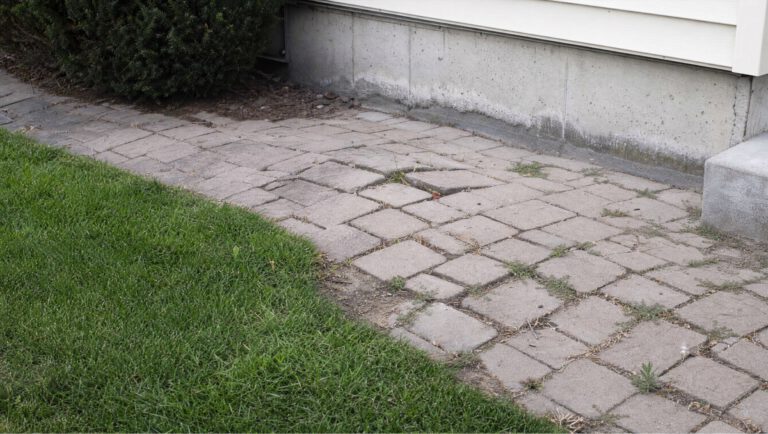
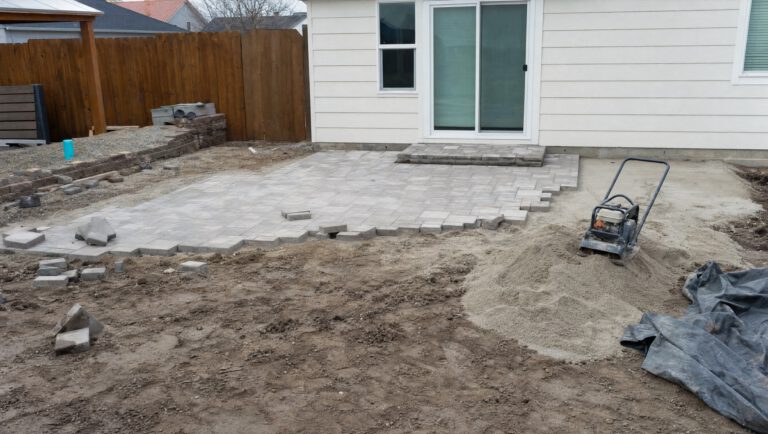
The compacted aggregate base beneath your pavers is the foundation of the entire system. It determines whether your installation stays level and solid for 30 years or starts shifting and sinking within the first three. The pavers themselves — regardless of how beautiful or expensive they are — are only as good as what’s underneath them.
Industry standards call for a minimum of 6 inches of compacted crushed aggregate for residential patio applications, and 8 inches or more for driveways. Critically, that base needs to be compacted in lifts — typically 3 to 4 inch layers — rather than all at once. Dumping 8 inches of material and running a plate compactor over the top produces a surface that feels solid but has deep layers of loose material that will shift under load and settle over time.
A contractor who can tell you exactly how deep their base will be, what material they use, and how they compact it in lifts knows what they’re doing. A contractor who gives you a vague answer, changes the subject, or tells you “we’ve been doing this for years” without answering the question is telling you something important.
Question 2: How Will You Handle Drainage on This Site?
Water is the primary cause of premature hardscape failure — and drainage is the only defense against it. A contractor who doesn’t raise drainage as a topic before you ask, or who dismisses it with a generic reassurance, is either not thinking about it or hoping you aren’t.
The right answer to this question isn’t a single sentence. It involves the contractor describing how they’ll slope the finished surface to direct water away from structures, what they’ll do about downspout discharge if it terminates near the project area, and whether your site’s soil conditions or topography require any subsurface drainage infrastructure.
In the Treasure Valley, where clay soils hold moisture and freeze-thaw cycles damage anything that traps water beneath the surface, drainage design isn’t optional — it’s the work. A contractor who walks your property, identifies the water flow patterns, and explains specifically how the installation will manage them is a contractor who understands the full scope of the job.
Question 3: Are You Licensed and Insured? Can I See the Certificates?
This question feels basic, but it matters more than most homeowners realize — and a surprising number of contractors in the outdoor trades operate without proper coverage.
There are two types of insurance that matter for a hardscape project:
General Liability Insurance
This covers property damage caused by the contractor’s work. If a crew member accidentally damages your irrigation system, breaks a window, or causes structural damage during excavation, general liability is what covers the repair. Without it, you’re filing a claim on your own homeowner’s policy — or pursuing the contractor personally, which is typically a losing proposition.
Workers’ Compensation Insurance
This covers the contractor’s employees if they’re injured on your property. Without workers’ comp, an injured worker can potentially make a claim against your homeowner’s policy — or against you directly. In Idaho, workers’ compensation requirements apply to most employers with one or more employees, but enforcement in the outdoor trades is inconsistent and uninsured contractors are not uncommon.
Ask for certificates of insurance — not just a verbal confirmation — and verify that both policies are current. A reputable contractor will provide these without hesitation. One who gets evasive or offers excuses is telling you something important about how they operate.
Question 4: What Does Your Warranty Actually Cover — and for How Long?
Warranty language in the hardscape trade deserves close attention. There are two different warranties at play on any paver project, and understanding the difference matters.
The Manufacturer’s Material Warranty
Quality paver manufacturers — Belgard, Unilock, and others — offer long-term warranties on the pavers themselves, typically 25 years or more against defects in the material. This warranty covers the product; it does not cover the installation. If your pavers shift, sink, or come apart because of how they were installed, the manufacturer’s warranty doesn’t apply.
The Contractor’s Workmanship Warranty
This is the warranty that actually matters for most of the things that go wrong with a hardscape installation — settling, drainage failure, shifting pavers, edge restraint failure. It covers the quality of the installation itself and should come directly from the contractor. The length and terms vary widely. Some contractors offer one year; others offer five or more. The more important question is: what does it actually cover, and what does the contractor commit to doing if a problem arises?
Ask specifically: “If I have shifting pavers or a drainage problem two years from now, what does your warranty commit you to doing?” Listen carefully to how they answer. A contractor who is genuinely confident in their work will give you a clear, direct commitment. One who hedges, qualifies, or starts listing exclusions is showing you how they’ll behave when something goes wrong.
Question 5: Can I See Completed Projects Similar to Mine — or Talk to Past Clients?
Portfolio and references are the most direct evidence available about how a contractor actually performs — and they’re surprisingly underutilized by homeowners who are otherwise careful about major purchases.
When reviewing a portfolio, look beyond whether the work looks attractive. Consider:
- Are the projects similar in scope and complexity to yours?
- How do the projects look after time has passed?
- Is there visible consistency in quality across projects, or are there noticeable variations?
- Do they have examples of work in your neighborhood or with your home’s architectural style?
References matter even more than portfolio photos. A homeowner who had a contractor on their property for two to four weeks — watched how the crew worked, experienced the communication, and has now lived with the finished product for a year or two — can tell you things no photo can. Ask specifically: “Was the project completed on time and within budget? Were there any problems, and how were they handled? Would you hire them again?”
Two More Things Worth Paying Attention To
How Do They Communicate Before the Project Starts?
The way a contractor communicates during the sales and estimating process is a reliable preview of how they’ll communicate once you’ve signed the contract and they have your deposit. Do they return calls promptly? Do they follow up when they say they will? Are their proposals clear and detailed, or vague and difficult to compare?
Does the Price Seem Too Good to Be True?
A bid that is dramatically lower than the others you’ve received isn’t a deal — it’s a question. What step is being skipped? What material is being substituted? What labor cost is being cut? If a bid is 40% below the others, the difference is real, and you’ll eventually find out where it went.
Frequently Asked Questions
What should a hardscape contractor’s proposal include? A detailed proposal should specify the scope of work, the base depth and material, the paver product (manufacturer, line, and color), the edge restraint system, the joint sand type, the surface slope specification, any drainage infrastructure, the project timeline, payment schedule, and the terms of the workmanship warranty.
How many quotes should I get for a hardscape project? Three quotes is a reasonable starting point for most projects. The goal isn’t to find the lowest number — it’s to understand the market, identify what’s included and excluded in each proposal, and evaluate the contractors as much as the prices.
Is it a red flag if a contractor asks for a large deposit upfront? Deposits are standard in the hardscape trade — material costs are significant and contractors reasonably require commitment before ordering. A deposit of 25 to 33 percent is typical. Requests for 50% or more upfront before work begins are worth questioning.
What happens if my contractor disappears mid-project? Your primary protections are: a detailed written contract that specifies milestones and payment tied to completion stages, a modest upfront deposit rather than full prepayment, and verification of the contractor’s insurance and business registration before work begins.
Should I get a hardscape contract in writing? Yes, always. A written contract protects both parties and should specify the full scope of work, materials to be used, project timeline, payment schedule, change order process, and warranty terms.
How do I verify a contractor’s insurance? Ask for a certificate of insurance (COI) naming you as an additional interested party, issued directly from the contractor’s insurance provider. Review it for current policy dates, the type of coverage, and coverage limits appropriate for the size of your project.
For reference, here is how we answer all five as a hardscape contractor in Boise.
Book a Project Discovery Call today.
Prefer to talk it through now? Call (208) 609-9805 — no cost, no commitment, just a conversation.
Nostalgic Paver Systems
Planning a project of your own?
Let’s talk through your space, your timeline, and what it would take to build it right the first time.
Book a Project Discovery Call