What a $75,000 Paver Patio Actually Includes (And Why It’s Worth Every Dollar)
Premium hardscape projects carry premium price tags — and most homeowners have no idea what accounts for the difference. Here’s exactly where the money goes, and why each piece of it matters.
A $75,000 paver patio is not a $10,000 patio with a markup. It is a fundamentally different scope of work, built to a different standard, with different materials, different labor, and different long-term outcomes. Understanding what that investment actually covers — line by line — is the clearest way to evaluate whether a proposal represents genuine value or inflated numbers.
This piece breaks down every component of a high-end paver installation, explains what each one involves, and makes the case for why cutting any of them produces a result that looks similar on installation day and fails to deliver on the promise over the years that follow.
We’re writing this for homeowners who have received a proposal in this range, felt genuine sticker shock, and want to understand what they’re actually buying before they decide. It’s also for homeowners who have received a much lower bid and are wondering what the difference is.
Why Does a Paver Patio Cost This Much?
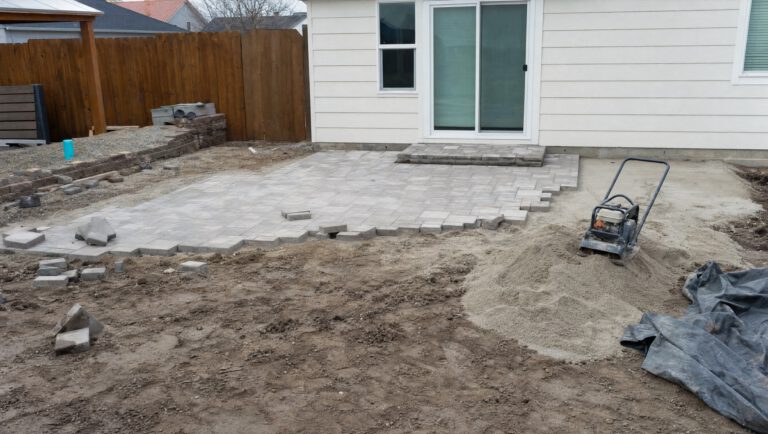
The honest answer is that most of what you’re paying for is invisible by the time the project is done. The pavers themselves — the beautiful surface you’ll look at every day — represent a meaningful but not dominant portion of a high-end installation’s total cost. The rest is the work beneath the surface: excavation, base preparation, drainage infrastructure, compaction, edge restraints, and the labor and project management required to execute all of it correctly.
There’s a useful analogy here. When you commission a custom home, you don’t pay premium prices just for the finishes — the cabinetry, the tile, the fixtures. You pay for the foundation, the framing, the mechanical systems, the insulation, and all the structural work that makes those finishes perform the way they should for decades. A premium hardscape project works the same way. The base is the foundation. The drainage is the mechanical system. The pavers are the finish.
The contractors who can quote a similar-looking project for significantly less are not building the same foundation. They are building a surface that will look comparable for two or three years, and then begin showing you — expensively — what was skipped.
The pavers are what you see. The base, the drainage, and the installation quality are what you’re actually buying.
Where Does the Money Go? A Full Breakdown
Below is every component that makes up a properly executed premium paver installation — what each one involves and why it’s in the proposal.
Every line in that table represents real work, real materials, and real consequences if it’s skipped or cut short. The proposals that come in significantly lower than others aren’t doing more with less — they’re doing less. The question is always: which line items are missing?
What Do Premium Paver Materials Actually Cost?
Material selection has a significant impact on project cost, and it’s worth understanding the spectrum before you evaluate a proposal.
Standard Concrete Pavers
Quality concrete pavers from manufacturers like Belgard or Unilock represent the most common choice for residential installations. They’re engineered for durability, available in a wide range of colors, textures, and sizes, and carry long manufacturer warranties. Standard lines are the workhorse of the industry — reliable, attractive, and well-suited to most residential applications. Material costs per square foot are meaningful but not the dominant cost driver in a well-specified installation.
Premium and Large-Format Pavers
Premium lines — large-format pavers, those with natural stone profiles, or pavers with specialized surface treatments — carry higher material costs and often more demanding installation requirements. Large-format pavers (24″ x 24″ and larger) have seen substantial growth in popularity in recent years for their clean, contemporary appearance and minimal joint lines. They also require more precise base preparation and bedding, as their size makes any surface irregularity more visible. The premium in material cost is real; so is the premium in the installation skill required to do them justice.
Natural Stone
Natural stone — travertine, bluestone, limestone, slate, and others — occupies the top of the material cost range and brings a character that manufactured concrete pavers can approximate but not replicate. Each piece is unique; the variations in color, texture, and veining are a feature, not a flaw. Natural stone installations require particular expertise in material selection (stone quality varies enormously by source), cutting, and sealing. They are also typically more demanding in terms of ongoing maintenance. For the right project and the right homeowner, the result is genuinely incomparable.
Why Does Labor Cost So Much on a Quality Installation?
Labor is typically the largest single cost component in a premium paver installation — and it’s the component that’s most directly tied to outcome quality. Here’s why the labor cost on a well-executed installation is what it is.
Skilled Crews Are Not Interchangeable
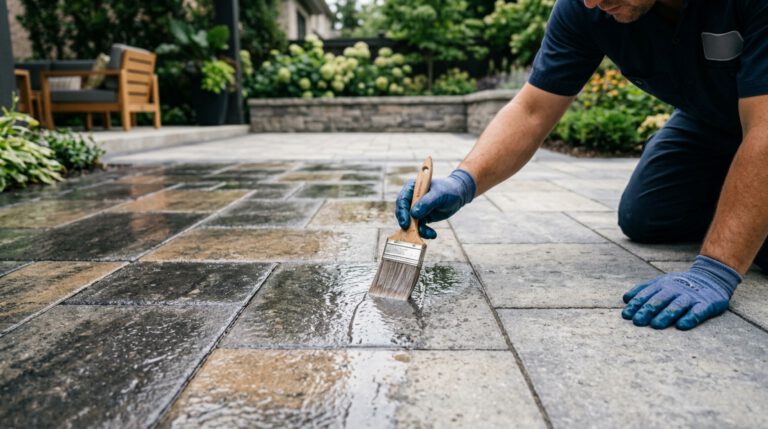
Paver installation done correctly is skilled trade work. Screeding a bedding layer to within 1/8″ across a large surface requires experience and care. Cutting pavers accurately to fit around curves, steps, and obstacles requires skill and proper equipment. Reading a grade correctly and establishing drainage slope that moves water reliably without being visible to the eye — this is not work that can be learned in a season. Experienced crews command higher wages because their work produces better outcomes. The difference between an experienced installer and an inexperienced one often isn’t visible on day one. It becomes very apparent by year three.
Proper Installation Takes Time
Base compaction done correctly requires multiple lifts and multiple compaction passes — it cannot be rushed. Screeding bedding sand to a precise, consistent depth requires careful work. Pattern layouts with borders, insets, or complex designs require planning and precision cutting. A crew that completes a project faster than the timeline suggests is reasonable has almost certainly compressed one or more of these steps. Speed and quality are in direct tension on a paver installation. The contractors who find ways to cut time almost always find those ways in the base work, where the consequences are invisible at completion and expensive months or years later.
Project Management Has Real Value
A high-end outdoor project involves coordinating excavation equipment, material deliveries, crew scheduling, subcontractors for any drainage or electrical work, inspections if required, and communication with the homeowner throughout. Project management done poorly produces delays, miscommunication, material shortages, and the kind of experience that homeowners describe in negative reviews. Done well, it’s invisible — the project proceeds on schedule, the homeowner is informed at every stage, and the finished result matches what was designed. That invisible coordination has a cost, and it’s included in a professionally managed project.
Speed and quality are in direct tension on a paver installation. The contractors who find ways to cut time almost always find them in the base work.
What Does a Significantly Lower Bid Actually Mean?
If you’ve received a proposal for a similar scope of work at $35,000 or $40,000 when others are coming in at $70,000 to $80,000, the gap is not a negotiating position — it’s a specification difference. Here are the most common places where that cost comes out:
Reduced Base Depth
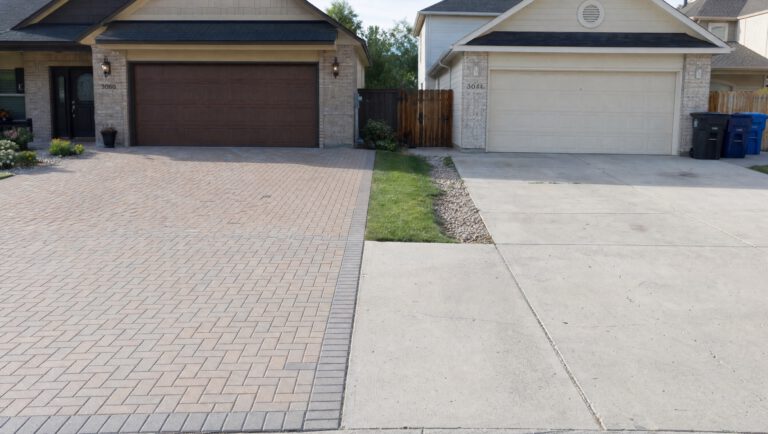
Excavating deeper, hauling more material away, and installing more aggregate base is the single fastest way to reduce a project’s cost. It’s also the single most consequential shortcut. A base that’s 3 inches deep instead of 6 looks identical at completion. It behaves very differently after three winters in Idaho clay.
No Drainage Design
Designing drainage costs time in the planning phase and may add material cost for channel drains, perforated pipe, or gravel beds. Skipping it is fast and cheap. The cost arrives later, when the homeowner discovers that every rain event leaves standing water on or around the installation — or worse, that water is migrating toward the foundation.
Lower-Grade Materials
Not all concrete pavers are equal. Entry-level pavers from manufacturers with less rigorous quality standards are meaningfully less expensive than premium lines. The difference may not be visible for several years. Color fade, surface spalling, and reduced freeze-thaw resistance are the most common failure modes for lower-grade materials in Idaho’s climate.
Uninsured or Underqualified Labor
Labor costs can be reduced significantly by using less experienced crews, workers without proper classification, or subcontractors who are not carrying required insurance. The quality and liability implications of this choice become relevant the moment something goes wrong — either with the installation or on the job site.
None of this means every low bid is a bad actor. Some smaller contractors have lower overhead and can genuinely deliver quality work at lower margins. The way to evaluate this is not by the number — it’s by asking the specific questions that reveal what the specification actually includes. A contractor with a lower bid who can answer every technical question clearly and specifically is a different conversation from one who deflects.
What Is the Return on a $75,000 Outdoor Investment?
The return on a premium paver installation comes from several directions, not all of them financial.
Property Value
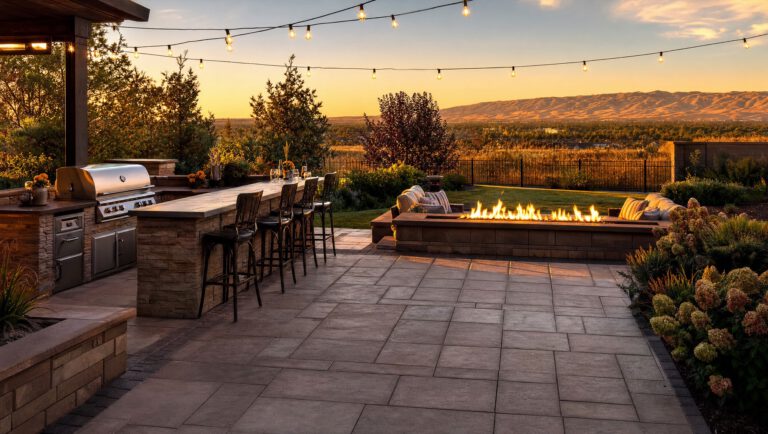
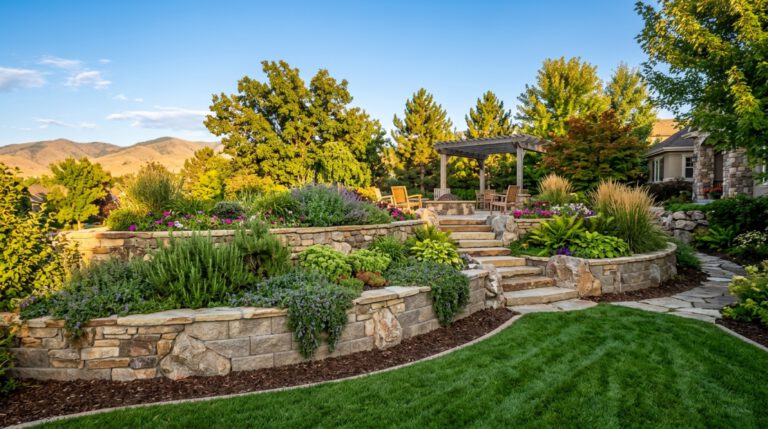
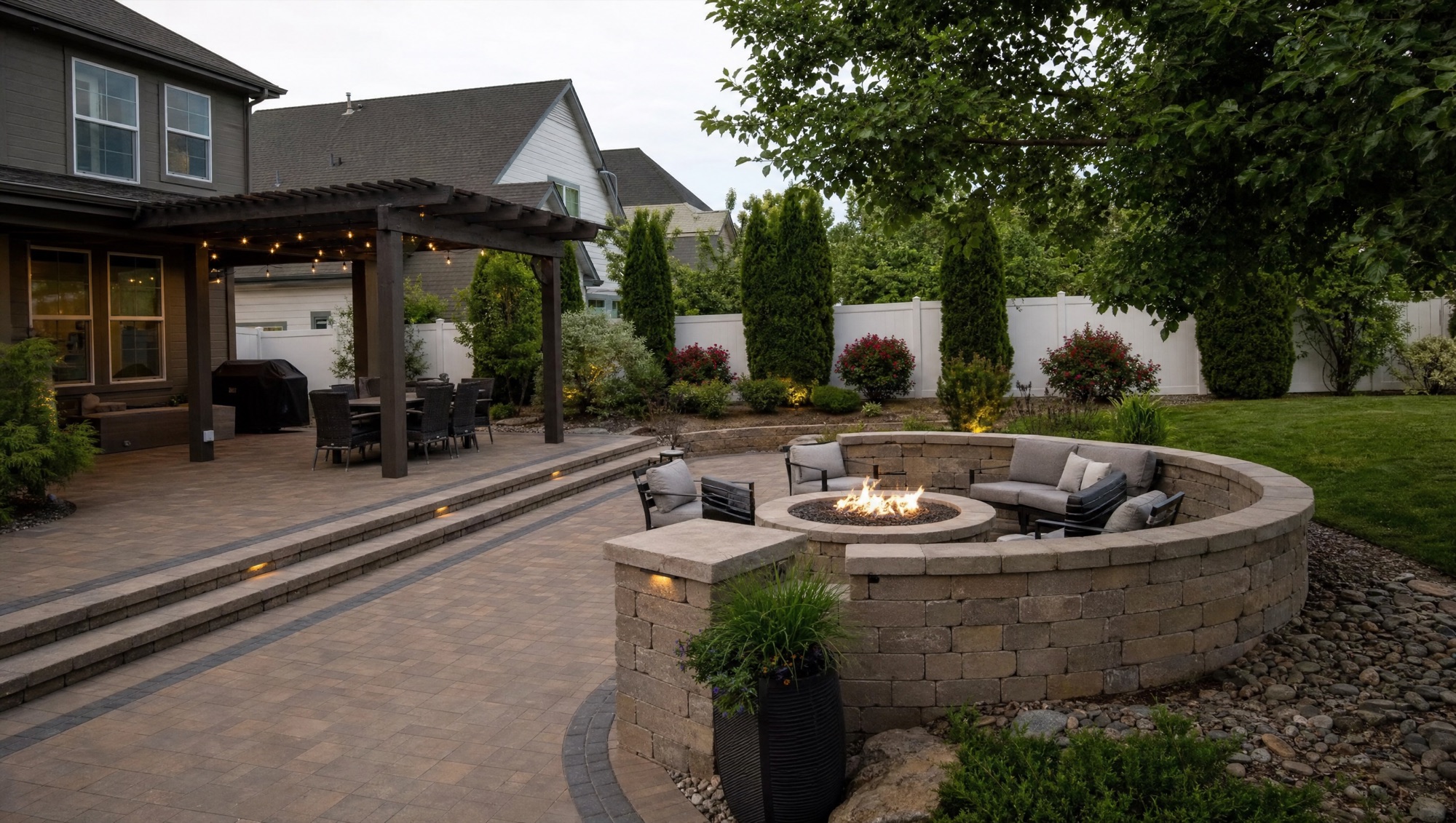
Premium hardscape consistently ranks among the highest-ROI exterior improvements for residential properties. In the Treasure Valley’s competitive market, a well-designed outdoor living space with quality paver work, integrated seating walls, and a cohesive design that extends the home’s living area meaningfully differentiates a property at resale. Real estate professionals in the Boise area regularly cite outdoor living quality as a significant factor in both sale price and time on market.
Daily Use and Enjoyment
Outdoor living spaces consistently score among the highest “joy ratings” of any home improvement category — homeowners who invest in them use them constantly and report high satisfaction for years after installation. A well-designed patio or outdoor living space genuinely changes how a family uses their home. That’s a return that doesn’t show up on an appraisal but matters more than the financial ROI calculation to most people who have one.
Peace of Mind
A properly built installation, backed by a genuine workmanship warranty from a contractor with 20 years in the local market, is something you don’t have to think about. You use the space. You don’t monitor it for cracks, manage a drainage problem every spring, or wonder whether the shifting in one corner is getting worse. That freedom from worry is part of what a premium installation buys. It’s not something you can quantify in advance, but it’s something every homeowner who has dealt with a failing installation understands deeply.
Ready to Understand What Your Project Would Actually Cost?
There’s no substitute for a site visit and a detailed, itemized proposal from a contractor who has been building this kind of work in the Treasure Valley for over 20 years. At Nostalgic Paver Systems, every proposal we produce specifies exactly what’s included — base depth, drainage approach, materials, edge restraint system, warranty terms — so you can evaluate it against any other proposal on an apples-to-apples basis.
If you’ve received a proposal that surprised you — in either direction — we’re happy to walk through it with you and help you understand what you’re looking at.
That level of detail is standard on our paver patio installations in Boise.
Book a Project Discovery Call today.
Prefer to talk it through now? Call (208) 609-9805 — no cost, no commitment, just a conversation.
Frequently Asked Questions
What is the average cost of a paver patio in Boise, Idaho?
Paver patio costs in the Treasure Valley vary widely based on size, material selection, site conditions, and the scope of drainage and structural work involved. Entry-level installations on simple sites with standard materials can come in well under $20,000. Premium outdoor living spaces with high-end materials, retaining walls, drainage infrastructure, and larger footprints regularly run $75,000 to $150,000 or more. The most useful frame is cost per square foot for a given scope and specification — a detailed, itemized proposal is the only reliable way to understand what a specific project would cost.
Why do some hardscape quotes come in so much lower than others?
Large gaps between bids for similar projects almost always reflect specification differences, not pricing differences. The most common sources of a lower bid are reduced base depth, omitted drainage work, lower-grade materials, and less experienced or uninsured labor. Asking each contractor specifically what base depth they’re specifying, what drainage approach they’re planning, and what materials are included will typically reveal where the gap comes from.
How long does it take to build a $75,000 paver patio?
A project of this scale typically takes two to four weeks from mobilization to completion, depending on site conditions, project complexity, and weather. Projects with significant drainage infrastructure, multiple material types, or complex design elements can run longer. A detailed project timeline should be part of any professional proposal, with milestone dates for key phases of the work.
Is a $75,000 paver patio a good investment?
For homeowners planning to stay in their property and use the space regularly, a premium paver installation typically delivers strong returns — in property value, daily use, and the absence of ongoing maintenance costs. Nationally, outdoor living improvements consistently rank among the highest-ROI exterior upgrades. In the Treasure Valley’s strong resale market, premium hardscape is a meaningful differentiator. The financial return is real; the quality-of-life return is what most homeowners say they value most.
What should be included in a hardscape proposal?
A complete hardscape proposal should specify: exact scope of work, base material and depth, paver product (manufacturer, line, color, thickness), edge restraint type and installation method, joint sand type, surface slope specification, drainage approach and any subsurface infrastructure, project timeline, payment schedule, insurance coverage, and workmanship warranty terms. Proposals that list only a total price and a general description are inadequate for comparison or for holding a contractor accountable to what was agreed.
What is the most expensive part of a paver installation?
Labor is typically the largest single cost component of a premium paver installation, followed by materials. Within the labor cost, base preparation — excavation, aggregate installation, and compaction — is the most time-intensive phase and represents a significant portion of the total. This is also the phase most vulnerable to shortcuts, which is why understanding what the base specification includes is the most important single question to ask when evaluating a proposal.
Nostalgic Paver Systems · Boise, Idaho · Serving the Greater Treasure Valley · nostalgicpavers.com
Nostalgic Paver Systems
Planning a project of your own?
Let’s talk through your space, your timeline, and what it would take to build it right the first time.
Book a Project Discovery Call