Retaining Walls in the Treasure Valley: What They Are, When You Need One, and How to Get It Right
Retaining walls are one of the most structurally consequential projects a homeowner can undertake. Done correctly, they stop erosion, create usable space, and last for decades. Done wrong, they fail — sometimes dramatically. Here’s what Boise homeowners need to know before they start.
A retaining wall does one thing: it holds back soil. But the engineering, planning, and installation required to do that reliably — year after year, through Idaho’s freeze-thaw cycles and clay-heavy soils — is anything but simple. Across more than 20 years of hardscape work in Boise, Meridian, Eagle, Nampa, and the wider Treasure Valley, our team at Nostalgic Paver Systems has built retaining walls that have held for decades and repaired walls that failed within a season. The difference between those two outcomes almost always comes down to design and execution.
This guide explains what retaining walls actually do, when you need one, what a proper build involves, and what questions to ask before you hand a contractor a deposit.
What Does a Retaining Wall Actually Do?
At its core, a retaining wall resists the lateral pressure of soil on one side. When you have a sloped lot — which describes a significant portion of properties in the foothills, the West Bench, and communities like Eagle and Kuna — that soil wants to move downhill. Gravity never stops pushing. A retaining wall pushes back.
Beyond slope management, retaining walls serve several practical purposes: they convert sloped, unusable terrain into level outdoor living space; they control erosion and protect landscaping, hardscape, and structures from the effects of water runoff; they define property boundaries and create visual interest; and they can support significant loads above and below — including driveways, patios, and sometimes structures.
In the Treasure Valley specifically, the combination of expansive clay soils, a pronounced freeze-thaw cycle, and the irrigation-heavy watering habits of local homeowners creates an environment that stresses retaining walls more than a mild climate would. Walls here need to be built for those conditions — not to a national generic standard.
When Do You Actually Need a Retaining Wall?
Not every sloped yard needs a retaining wall. But there are several clear situations where a wall is the right solution:
When You’re Losing Soil or Landscaping
If soil, mulch, or gravel consistently migrates downhill after rain or irrigation, your slope is actively eroding. A retaining wall, properly drained, stops that movement permanently.
When You Want to Create Usable Flat Space
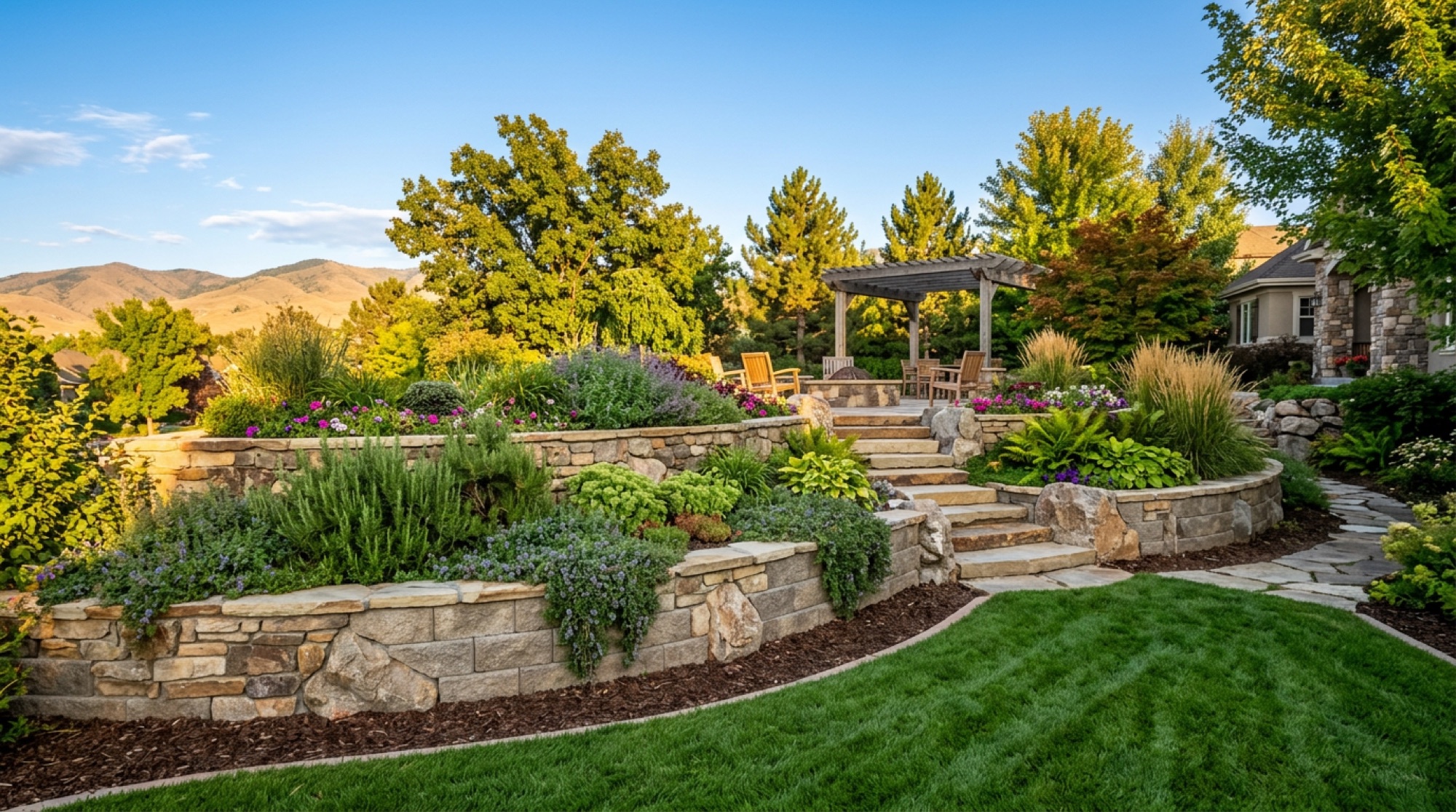
The most common reason Treasure Valley homeowners install retaining walls is to carve level patio space, garden areas, or lawn out of a sloped yard. Tiered walls can transform a nearly unusable hillside lot into a functional outdoor environment.
When a Slope Threatens a Structure or Driveway
If a sloped area runs toward your home’s foundation, driveway, or a paved surface, you may have both a cosmetic and a structural problem developing. Proper wall placement redirects that pressure before it becomes costly.
When Existing Walls Are Failing
Bowing, leaning, cracking, or walls that have separated from adjacent structures are not cosmetic issues — they are signs of active structural failure. A wall that is failing is typically losing its battle with soil pressure and needs professional assessment quickly, before it fails completely.
What Goes Into a Properly Built Retaining Wall?
Retaining walls look simple from the outside. The work that determines whether they last is invisible — buried in the ground behind them.
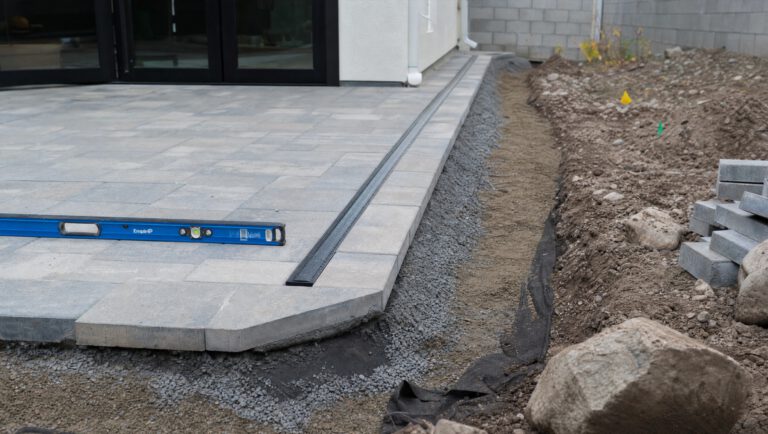
Drainage is the foundation of everything. Water trapped behind a retaining wall dramatically increases the pressure that wall must resist. A proper build includes a gravel drainage layer behind the wall and, in most cases, a perforated drain pipe at the base (a French drain) that directs water away from the structure. Without this, even a well-built wall is fighting against hydrostatic pressure that will eventually win.
Proper base excavation and footing. Every retaining wall needs a compacted gravel base set below the frost line — roughly 12 to 18 inches in most Treasure Valley applications. Walls that are built on unprepared or shallow bases will settle unevenly, causing lean and eventual failure.
Batter and deadman anchoring. Taller walls — typically anything over 24 inches — should be built with a slight rearward tilt (batter) and may require deadman anchors (horizontal sections that extend back into the hillside) to resist the leverage created by the soil load above. This is not optional engineering; it is the difference between a wall that holds and one that doesn’t.
Material choice that suits the application. Segmental block walls (such as those using Allan Block or Belgard products) are appropriate for most residential applications and offer design flexibility. Larger natural stone and poured concrete walls are used in more demanding structural situations. The right material depends on wall height, soil load, water exposure, and aesthetics.
How Tall Can a Retaining Wall Be Without a Permit?
In most Treasure Valley jurisdictions, retaining walls under 4 feet in height do not require a building permit, though this varies by municipality. Walls over 4 feet — or walls of any height that support a surcharge load like a driveway, structure, or additional wall above — typically require engineered drawings and a permit.
This is not a bureaucratic formality. A retaining wall over 4 feet that fails can cause significant property damage and safety hazards. If a contractor tells you that a tall wall doesn’t need any permits or engineering review, that is a red flag.
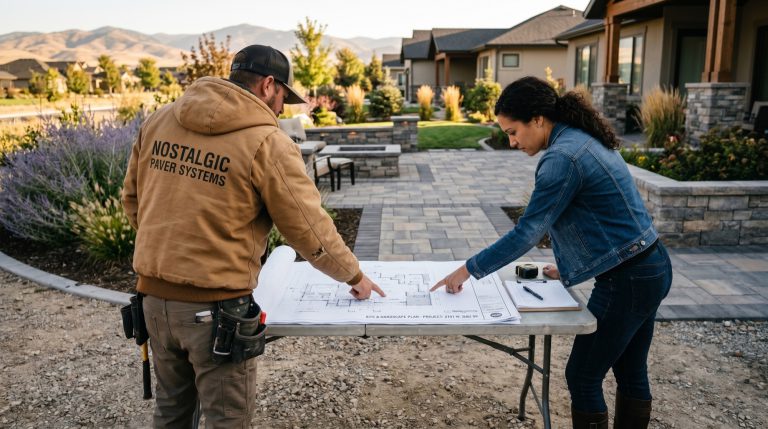
Our team navigates the permitting and engineering requirements as part of every project that requires them. You shouldn’t have to become an expert in local building codes — that’s our job.
What Should a Retaining Wall Cost in the Treasure Valley?
Retaining wall costs vary significantly based on height, length, material, drainage complexity, and access. A rough framework for budgeting:
- Small walls (under 2 feet tall, straightforward drainage): $50–$80 per linear foot installed
- Medium walls (2–4 feet tall, proper drainage, compacted base): $80–$150 per linear foot installed
- Taller or engineered walls (4+ feet, deadman anchoring, professional drainage design): $150–$300+ per linear foot installed
These ranges assume quality materials and proper execution. Bids that come in well below these figures typically indicate shortcuts in drainage, base preparation, or anchoring — the three elements that determine whether a wall lasts.
Ready to Get It Done Right?
Nostalgic Paver Systems has been building and repairing retaining walls across Boise and the Treasure Valley for over 20 years. Every wall we build is engineered for Idaho’s specific conditions — the freeze-thaw cycle, the expansive soils, the irrigation loads — and backed by our workmanship warranty and unconditional commitment to standing behind the work.
If you have a slope that needs managing, erosion that’s getting worse, or a wall that’s starting to show signs of distress, we’d love to walk the site, assess what’s actually going on, and give you a clear picture of your options.
→ Book a Project Discovery Call today.
Frequently Asked Questions
What is the best material for a retaining wall in Idaho? Segmental concrete block — products like Allan Block or Belgard retaining wall systems — is the most common and versatile choice for residential applications in the Treasure Valley. These systems are engineered for freeze-thaw conditions, offer flexible design options, and can be built to significant heights with proper engineering. Natural stone is also an excellent choice for a more traditional aesthetic. Treated timber walls are not recommended for Idaho’s climate due to accelerated deterioration from moisture cycling.
How long does a retaining wall last? A properly built segmental block or concrete retaining wall should last 50 years or more with minimal maintenance. The most common causes of early failure are drainage problems (which increase pressure behind the wall), insufficient base preparation, and inadequate anchoring on taller walls. Walls that were built correctly tend to look and perform well for generations.
Do I need a permit for a retaining wall in Boise? In most cases, walls under 4 feet in height do not require a permit in Boise and surrounding Treasure Valley jurisdictions. Walls taller than 4 feet, or any wall that supports a surcharge load (driveway, building, or another wall above), typically require a building permit and engineered drawings. Requirements vary by city, so it’s worth confirming with your municipality or working with a contractor who manages this as part of the project.
Why is my retaining wall leaning or bowing? Leaning or bowing is a sign of structural distress — the wall is being pushed beyond its design capacity, usually because of drainage failure (water pressure building behind it), inadequate base depth, or missing anchoring for the wall’s height and soil load. A leaning wall should be assessed promptly; once failure begins, it typically accelerates. Depending on the extent of the problem, repair or full replacement may be required.
How much does drainage matter for a retaining wall? It is the single most important factor in long-term wall performance. Water trapped behind a wall increases the lateral pressure the wall must resist by an enormous factor — in saturated clay soils, that pressure can be several times what a dry soil load would produce. Every properly built retaining wall in the Treasure Valley needs a gravel backfill layer and, in most cases, a perforated drain pipe at the base to move water away from the structure.
Can I build a retaining wall myself? Small landscape walls under 12 to 18 inches in height — the decorative variety used for garden borders — are within reach of a competent DIYer. Anything taller than that, particularly walls that are structural, support a slope above a patio or driveway, or need drainage engineering, should be handled by a professional. The consequences of a structural retaining wall failure are significant, and the hidden work — base preparation, drainage, anchoring — is not intuitive.
Nostalgic Paver Systems · Boise, Idaho · Serving the Greater Treasure Valley · nostalgicpavers.com
See how retaining wall construction fits into the rest of what we build.
Book a Project Discovery Call today.
Prefer to talk it through now? Call (208) 609-9805 — no cost, no commitment, just a conversation.
Nostalgic Paver Systems
Planning a project of your own?
Let’s talk through your space, your timeline, and what it would take to build it right the first time.
Book a Project Discovery Call